
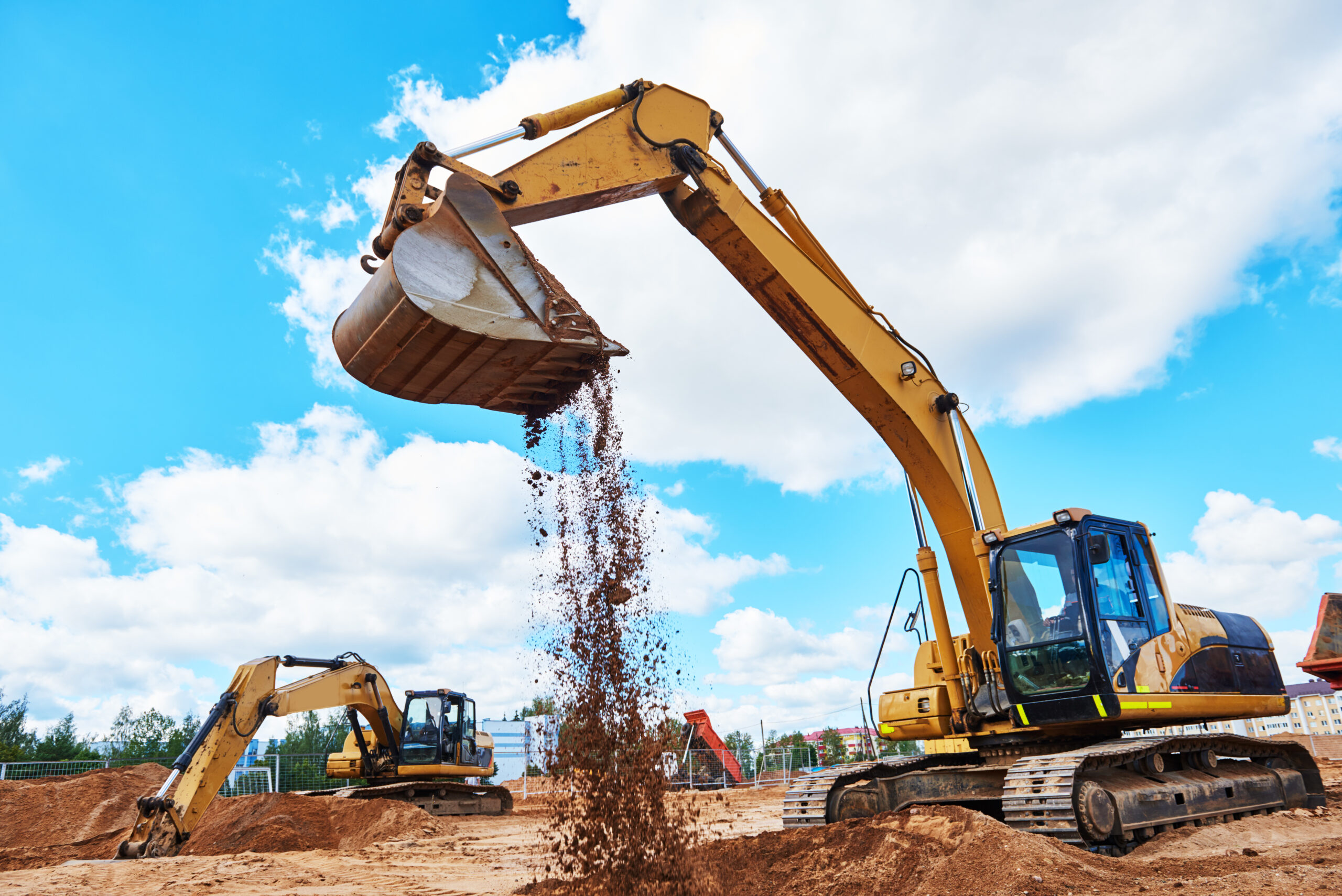
Excavator Rental in Racine, WI — Sizes, Delivery & What to Know Before You Rent
Racine job sites don’t wait. When a foundation needs to come out on Douglas Avenue, a drainage line has to go in before the ground freezes, or a commercial lot on Durand Avenue needs rough grading, the machine has to show up on time and fit the conditions you’re actually working in. CIS Equipment provides excavator rental in Racine, WI, delivering mini excavators and full-size machines directly to your site so your crew can get to work without the overhead of ownership.
This page covers everything you need before you reserve: which machine class fits your project, how Racine’s clay soils and dense urban lots affect that choice, what to have ready for delivery day, and how rental pricing is structured. For a broader look at the equipment CIS delivers throughout the city and surrounding townships, see the Racine heavy equipment rental service area page.
Excavator Rentals Available for Racine-Area Jobs
CIS Equipment stocks a range of excavator classes, from compact mini excavators suited to tight residential lots to larger machines capable of handling commercial-scale trenching and mass excavation. The fleet is maintained and inspected between rentals, so what you pick up (or receive on delivery) is ready to run.
Mini excavators in the 1.5-ton to 6-ton range are the most frequently rented class in Racine. Their reduced width lets them pass through standard fence gates and maneuver in side yards without tearing up landscaping. Larger excavators, typically in the 10-ton-plus category, are the right call for deep utility work, commercial footings, and any project where the volume of material moved per hour matters more than machine footprint.
Attachments vary by machine, so confirm what’s available when you call or book online. Bucket size, thumb attachments, and auger compatibility can all affect which unit fits your job best. If you’re not sure where to start, the guide on what size excavator you need for your job walks through the decision in plain terms.
What Size Excavator Do You Need for Your Racine Project?
Size selection comes down to three factors: required dig depth, available working width, and material density. Get one of those wrong and you’ll either rent too little machine or haul in something that can’t fit the site.
Dig depth. Most residential utility repairs, pool excavations, and drainage corrections in Racine fall in the 6-to-10-foot range. A 3-ton to 5-ton mini excavator handles that comfortably. Deeper commercial work, say a 14-foot foundation excavation or a storm sewer tie-in, calls for a larger class with more arm reach and counterweight to stay stable at depth. The resource on mini excavator depth capabilities for Wisconsin jobs gives specific dig-depth benchmarks by machine class.
Working width. Racine’s older residential neighborhoods, particularly the blocks running off Lake Avenue and into the Uptown corridor, were platted tightly. Many lots are 40 to 50 feet wide with fences, mature trees, and outbuildings limiting access. A standard mini excavator with the blade retracted can clear gates as narrow as 36 inches. Anything wider than about 6 feet of working corridor opens the door to a mid-size machine.
Material type. Racine sits on glacially deposited clay and clay-loam soils that become extremely dense below the first 18 inches of topsoil. Underpowered machines bog down fast in that material. Rent one size class above what you’d choose based on depth alone if you’re going into undisturbed native clay, and factor in bucket selection accordingly.
For projects where an excavator might be overkill, review the comparison of mini excavators versus skid steers for trenching in tight spaces to confirm you’re renting the right machine type.
Common Projects That Call for an Excavator Rental in Racine
The mix of project types across Racine is varied. Here’s what renters are typically using excavators for in this market:
- Utility line installation and repair. Water service replacements, lateral sewer repairs, and gas line excavations are among the most frequent calls. Clay soil holds trench walls reasonably well at shallow depths, but shoring requirements kick in fast below 5 feet. Before any dig, call Wisconsin 811 (Digger’s Hotline) to have underground utilities marked. This is a legal requirement in Wisconsin, not optional, and the responsibility falls on the operator before any excavation begins. Need help choosing between an excavator and a dedicated trencher for utility work? The breakdown of excavator vs. trencher for utility lines is a useful starting point.
- Pool and spa excavation. Residential pools are common in Racine’s south-side and Mount Pleasant-adjacent neighborhoods. Access through a gate or along a narrow side yard is often the first constraint to solve. See the guide on prepping for pool and spa excavations for staging and spoils-management considerations.
- Foundation and basement work. Older homes throughout Racine’s historic districts and the lakefront bluff areas often need foundation repair or full basement excavation. The dense clay profile here means bucket penetration takes more force than sandy or loamy sites further inland.
- Commercial site prep on Durand and Douglas corridors. Infill development and parking lot reconfiguration along Racine’s commercial strips frequently requires machine excavation for drainage structures, grade adjustment, and utilities prior to paving.
- Drainage corrections and yard grading. Flat lots and clay soil are a standing-water combination. Excavators are the right tool for cutting swales, installing catch basins, and shaping positive drainage flow away from structures.
- Trench work for irrigation, electric, and low-voltage lines. Shallow trenching for irrigation or conduit runs is a common weekend rental, especially from May through October.
Delivery to Racine: Site Access, Drop-Off, and What to Prepare
Equipment delivery in an urban market like Racine has real logistics. A few things to sort out before the truck rolls:
Street access and parking restrictions. Racine’s City of Racine Public Works department manages street use permits for equipment staging on public right-of-way. If your drop-off point requires blocking a lane or staging a machine on the street, check with Racine Public Works before delivery day to avoid delays or citations.
Delivery vehicle clearance. CIS delivers on a trailer pulled by a heavy-duty truck. Overhead clearance of at least 14 feet is required under any overhead obstructions (power lines, tree canopy, low-clearance gates). The approach to your site needs to support the combined weight of the delivery truck and machine, typically 40,000 to 60,000 pounds on the drive axles depending on machine class.
Offload surface. The machine offloads via ramps. The ground at the offload point needs to be firm and reasonably level. Soft or saturated ground at the drop zone can cause ramp settling and complicate unloading safely.
Designated staging area. Have a clear area confirmed before delivery. The driver needs to know where the machine goes and can’t safely leave it on a slope without proper blocking.
The full checklist of delivery requirements, including clearance specs and site-prep steps, is available in the equipment delivery requirements checklist. Review it before you book if you have any uncertainty about your site.
Racine’s Soil, Lot Sizes, and Why They Affect Machine Choice
Southeastern Wisconsin’s glacial history left Racine with some of the heaviest clay soils in the state. Unlike the sandier soils further south near the Illinois border, Racine’s native ground becomes nearly concrete-like when dry and turns plastic and sticky when wet. Both conditions affect how you rent.
Clay soil in practice. Dense clay demands more breakout force from the bucket. On a mini excavator, this means the machine works harder per cubic yard moved than it would in loam or sand, which affects how much ground your crew covers in a day. If your job has a hard production schedule, size up rather than rent the smallest machine that technically fits. It’s also worth knowing that clay swells when excavated; the spoil pile from a clay excavation takes up significantly more volume than the hole it came from, which affects where you stage material on site.
Lot configuration in the city. Racine’s urban core has narrow, deep lots, many platted in the 1880s and 1890s, with homes close to lot lines and minimal side clearance. Mount Pleasant, which borders Racine to the west and south, has a different pattern: larger parcels, more suburban spacing, but still heavy clay. The right machine for a Mount Pleasant development site is often a size class larger than what you’d choose for a job on a North Side Racine city lot.
Lakefront and bluff terrain. Properties on or near the Lake Michigan bluff face a separate challenge: unstable soils near the bluff edge and very limited equipment access from the lake-facing side. Setback requirements and slope stability are operator concerns to factor in before selecting a machine weight class.
Frost depth. Racine’s frost line runs 42 to 48 inches, and frozen ground in December through March is a serious variable. Excavating frozen clay is significantly harder and slower than working in the same material in July. Plan for reduced production and confirm that the machine class you’re renting has adequate digging force for winter conditions if your project can’t wait for spring.
Rental Rates and How Pricing Works in SE Wisconsin
Excavator rental pricing follows a consistent structure across the southeastern Wisconsin market, even if the exact figures vary by machine class, availability, and rental duration. Here’s how to think about it:
Machine class drives base rate. Mini excavators in the 1.5-ton to 6-ton range rent at a lower daily and weekly rate than mid-size (10-ton to 20-ton) machines. The rate difference isn’t trivial: a full-size excavator can run two to three times the daily rate of a compact mini. Renting the right size for the job is a cost question as much as a capability question.
Duration discounts are real. Day rates are the highest cost-per-unit option. Weekly rates drop the effective daily cost significantly, often by 40% to 50% compared to stacking individual day rentals. If your project runs four or five days, a weekly rental almost always pencils out better than paying day-by-day. Monthly rates drop further for longer-term commercial work.
Delivery fees are separate. Delivery to Racine from CIS’s base in Union Grove involves transport costs that are quoted based on distance and machine class. Factor delivery in both directions (drop-off and pickup) into your total rental budget.
Fuel is on the renter. Machines are delivered with a full tank and should be returned full. Diesel consumption varies by machine class and work intensity, but budget accordingly for a full day of heavy clay excavation.
For current rates on specific machines, contact CIS directly or check the equipment pages on cisequipment.com. Rates change with fleet availability and season, so the number you get at booking is the one to plan around.
How to Reserve Your Excavator Rental in Racine
Reserving is straightforward, but a few steps before you call will make the conversation faster and get you the right machine the first time.
- Know your dig depth and working width. Even a rough answer, like “8 feet deep, 4-foot-wide access gate,” narrows the machine options immediately.
- Have your start date and duration ready. CIS’s fleet books out, especially in spring and fall when contractor demand peaks. If your project has a fixed start date, don’t wait to reserve.
- Confirm your site address and access details. Street address, any gate widths or overhead clearance constraints, and the delivery surface type help the team confirm whether a standard delivery setup works or if the site needs additional staging coordination.
- Ask about attachment availability. If your job needs a thumb, a specific bucket size, or an auger, confirm that at booking rather than on delivery day.
- Call 811 before you dig. This is a Wisconsin legal requirement. Call or submit a request online through Wisconsin 811 at least three business days before any excavation. Utility marking is the operator’s responsibility.
Ready to get a quote? Use the CIS Equipment contact page to request availability and pricing for your Racine project. Describe your project type, machine class preference, and delivery address, and the team will follow up with options.
Frequently Asked Questions About Excavator Rentals in Racine, WI
The questions below cover the most common things renters ask before booking an excavator in the Racine area.
Frequently Asked Questions
How far does CIS Equipment deliver excavators in the Racine area?
CIS Equipment delivers excavators throughout Racine County and the surrounding southeastern Wisconsin region, including the city of Racine, Mount Pleasant, Sturtevant, and adjacent communities. Delivery fees are calculated based on distance from the Union Grove base of operations. Contact CIS directly with your site address for an accurate delivery quote.
Do I need a special license or permit to operate a rented excavator in Racine?
Wisconsin does not require a special operator’s license to rent and operate a construction excavator on private property. However, any work near public right-of-way may require a permit from the City of Racine Public Works department. Additionally, all operators are legally required to call Wisconsin 811 at least three business days before digging to have underground utilities marked. Operating an excavator without utility clearance is both illegal and dangerous.
What is the minimum rental period for an excavator in Racine, WI?
The standard minimum rental period is one day. Weekly and monthly rental options are available and typically offer a lower effective daily rate. If your project scope is uncertain, booking a day rate with an option to extend is a practical approach. Confirm minimum period and extension policies at the time of reservation.
Can I rent a mini excavator instead of a full-size machine for a residential lot?
Yes, and for most Racine residential projects, a mini excavator is the right choice. Machines in the 3-ton to 6-ton class can access gated backyard entries, work in tight side yards, and handle typical residential dig depths without damaging driveways or turf excessively. For help matching machine class to your specific project, see the guide on mini excavator depth capabilities for Wisconsin jobs.
What do I need to have ready on my site before delivery?
Before delivery arrives, confirm that the approach to your property can support a fully loaded delivery truck (roughly 40,000 to 60,000 pounds), that there are no overhead obstructions below 14 feet along the delivery path, and that a firm, reasonably level offload surface is available. Designate a clear staging area for the machine. The complete list of requirements is in the equipment delivery requirements checklist.
How do I know if my access gate or driveway can handle equipment delivery?
Gate width is the first check: most compact mini excavators need at least 36 inches of clear opening. Standard residential gates at 48 to 60 inches pass most mini excavators without issue. For full-size machines, you’ll need a much wider access point. Driveway load capacity is a separate concern. Concrete or asphalt over a solid base handles delivery trucks well in most cases; older cracked concrete, thin asphalt over soft fill, or unpaved clay drives that are saturated may not. If you’re unsure, discuss your site conditions with CIS before booking so the right delivery plan is in place.
Getting an excavator rental in Racine, WI lined up before your project starts is one of the more straightforward parts of the job when you book with a supplier who knows the local terrain. Racine’s clay soils, narrow urban lots, and lakefront-adjacent conditions aren’t guesswork for CIS Equipment: they’re the everyday context for the machines in the fleet and the delivery routes the team runs. Pick the right size, prep your site for delivery, call 811 before any ground is broken, and your crew will be productive from the first hour the machine is on site.
Contact CIS Equipment today to check availability, confirm delivery logistics for your Racine address, and get a quote on the excavator class that fits your project. Use the contact page to reach the team directly, or browse available equipment online to see what’s in the fleet before you call.
